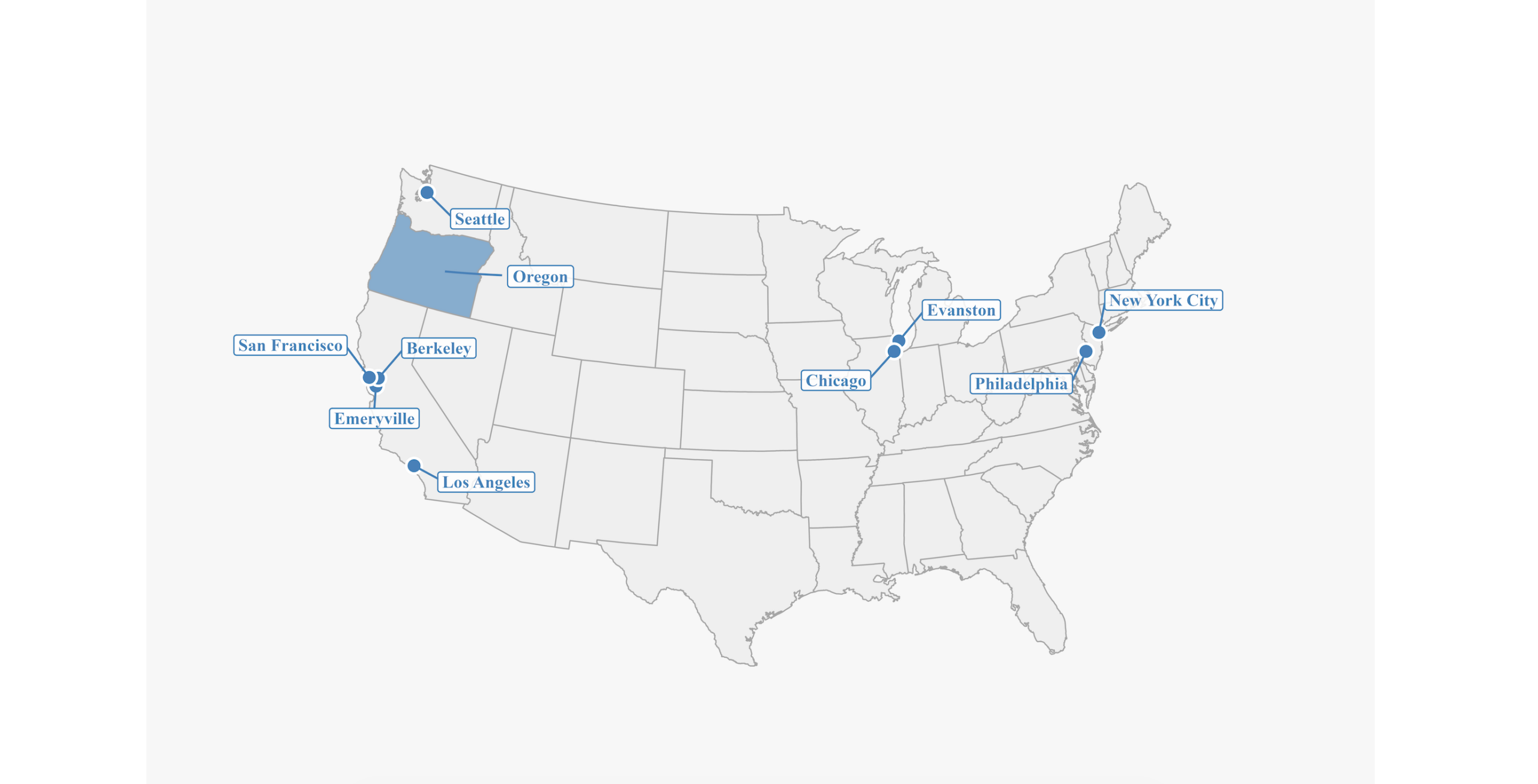

Work schedule instability and unpredictability have been identified as critical threats to hourly workers’ well-being, on and off the job. In response, over the past decade, policymakers have advanced Fair Workweek (FWW) laws to regulate these labor practices and to secure more stable and predictable schedules for hourly workers. Since San Francisco’s adoption of the first FWW policy in 2015, 8 municipalities and 1 state have followed suit and implemented their own regulations intended to discourage employers from engaging in “just-in-time” scheduling practices and to help underemployed workers secure more work hours.
While there is room for further research on the intended and unintended consequences of these statutes, a growing body of quantitative evidence offers several valuable insights that can inform future policymaking. Reviewing rigorous studies of the effects of FWW laws, we find:
- FWW policies can broadly reduce covered workers’ exposure to precarious scheduling practices, including having short notice of their work schedules or being assigned on-call shifts.
- There is no conclusive evidence that FWW laws have had any negative impact on workers’ number of work hours or on total employment in targeted industries.
- While less comprehensively studied, FWW policies appear to have positive impacts on workers’ downstream outcomes, namely improving sleep quality and reducing the experience of material hardship.
Suggested Citation
Schneider, Daniel, Kevin Bruey and Kristen Harknett. 2026. “How Well is Fair Workweek Working? A Review of Existing Research.” Shift Project research brief.